Choosing the Right Way to Reach Heathrow
Heathrow is the UK’s busiest airport, and getting there on time is the first test of any trip. The best route depends on where you’re starting from, how much luggage you have, what time your flight leaves, and whether you value speed, cost or comfort most.
This guide walks through every realistic way to reach Heathrow, from trains and the Tube to taxis, driving and chauffeur service, with a particular focus on travellers coming from London and Essex.
Ways to Get to Heathrow at a Glance
| Option | Best for | Typical journey time | Indicative cost |
| Heathrow Express | Speed from central London | About 15 minutes from Paddington to Terminals 2 and 3 | Highest of the rail options |
| Elizabeth line | A balance of cost and speed | Around 30 to 45 minutes, depending on where you start | From around £14 via Zone 1 |
| Piccadilly line (Tube) | Lowest cost | Around 50 to 60 minutes from central London | Usually the cheapest |
| Coach or bus | Budget travel from city hubs | Varies with traffic | Low |
| Taxi or ride-hailing | Door-to-door travel | Varies with traffic | Varies, can be high at peak times |
| Chauffeur service | Comfort, luggage, early or late flights | Door-to-door, varies with traffic | Quoted in advance |
Fares and journey times change regularly, so check TfL or Heathrow’s own transport pages before you travel.
Getting to Heathrow by Train
Heathrow Express
The Heathrow Express is the fastest rail link, running non-stop from London Paddington to Terminals 2 and 3 in around 15 minutes, with trains roughly every 15 minutes. Standard fares are higher than the other rail options, so it suits travellers who are short on time and starting near Paddington.
Elizabeth Line
The Elizabeth line serves Terminals 2 and 3, Terminal 4 and Terminal 5, and connects Heathrow with Central London, East London and Essex. It takes longer than the Heathrow Express but costs roughly half as much, which makes it a popular middle ground. It also calls at several central stations, so it can save a change if you’re starting from somewhere like Bond Street or Liverpool Street.
Getting to Heathrow by Tube
The Piccadilly line runs directly to every Heathrow terminal and is usually the cheapest way to get there by rail. The trade-off is time: expect around 50 to 60 minutes from central London, with many stops along the way, and it can be crowded during rush hour if you’re carrying luggage.
It’s also worth checking for planned engineering works before you travel. The Piccadilly line to Heathrow is sometimes closed for several days at a time, and replacement services on those dates can be busier and slower than usual.
Getting to Heathrow by Coach or Bus
National Express and other operators run coach services from central London hubs such as Victoria Coach Station, and local buses serve the area around the airport. Fares are low, but journey times depend heavily on traffic on routes like the M4 and A4, so allow extra time at peak hours.
Getting to Heathrow by Taxi or Ride-Hailing
A taxi or ride-hailing app takes you door to door, which is convenient with heavy bags. The downside is cost and unpredictability. Fares depend on distance and demand, and journey times stretch quickly during the morning and evening peaks, when roads into Heathrow are at their busiest.
Driving to Heathrow
Heathrow sits beside the M25 and M4, which makes it straightforward to reach by car from much of London and the South East. The costs add up quickly, though. On-site parking is expensive, pre-booking is usually cheaper than turning up, and Heathrow charges a fee for dropping off at terminal forecourts.
Driving also means leaving your car for the duration of your trip and managing the journey home afterwards, which is worth weighing against the alternatives for anything longer than a short break.
Getting to Heathrow from Essex
For travellers in Essex, the Elizabeth line is the main rail route, linking Essex with Central London and on to Heathrow. In practice, though, a journey from home with luggage can involve a car or taxi to the station, a train, and possibly a change, which makes for a long door-to-door trip.
By road, the M25 can be unpredictable at peak times and after incidents, so it pays to leave a generous buffer. Many Essex travellers choose a chauffeur transfer instead, so the whole journey is a single, direct trip with no connections to manage.
Getting to Heathrow by Chauffeur Service
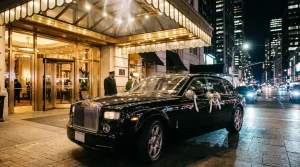
A chauffeur service is the simplest way to get to Heathrow if comfort and certainty matter more than the lowest fare. You’re collected from your door, your luggage is handled for you, and you’re dropped at the right terminal without worrying about stations, changes or parking.

It’s particularly useful in a few situations:
- Early morning or late night flights, when public transport options are limited
- Families, groups or anyone travelling with heavy or awkward luggage
- Business travellers who want to work or rest in the car rather than navigate the journey
- Return journeys, where a chauffeur tracking your flight is waiting when you land
Dorchester Luxury Cars provides airport transfers to Heathrow, Gatwick, Stansted, Luton and London City from across London and Essex, with flight tracking and meet-and-greet available. For more on how this works for work trips, see our guide to airport transfers for business travellers.
Which Heathrow Terminal Do You Need?
Before choosing a route, check which terminal your airline uses. It affects which station or drop-off point you need. The Elizabeth line and the Piccadilly line both serve all Heathrow terminals, while the Heathrow Express serves Terminals 2 and 3 directly, with a short onward connection needed for some other terminals.
Your booking confirmation or airline app will show your terminal, and it’s worth checking again closer to the day in case it has changed.
How Early Should You Leave for Heathrow?
Requirements vary by airline and time of day, but many airlines suggest arriving around two hours before a short-haul flight and around three hours before a long-haul one. Work backwards from your check-in time, then add a buffer for traffic, delays or engineering works.
If you’re travelling at a busy time of year or relying on roads, building in extra time is almost always cheaper than the alternative of missing a flight.
Tips for a Smooth Journey to Heathrow
- Check for rail and Tube engineering works before you set off
- Confirm your terminal and the correct station or drop-off point
- Choose the route with the fewest changes if you’re carrying heavy luggage
- Avoid peak road times where you can, particularly on the M4 and A4
- Pre-book parking or transfers rather than arranging them on the day
- Leave a buffer, even if everything looks smooth on the way
Which Option Is Right for You?
There’s no single best way to reach Heathrow. It comes down to what matters most on the day:
- Fastest from central London: the Heathrow Express
- Cheapest: the Piccadilly line
- Best balance of cost and speed: the Elizabeth line
- Most comfortable, door to door: a chauffeur service
Planning a stress-free journey to Heathrow from London or Essex? Get in touch with Dorchester Luxury Cars to book your airport transfer.